
Japanese "Byoubu-E" Master
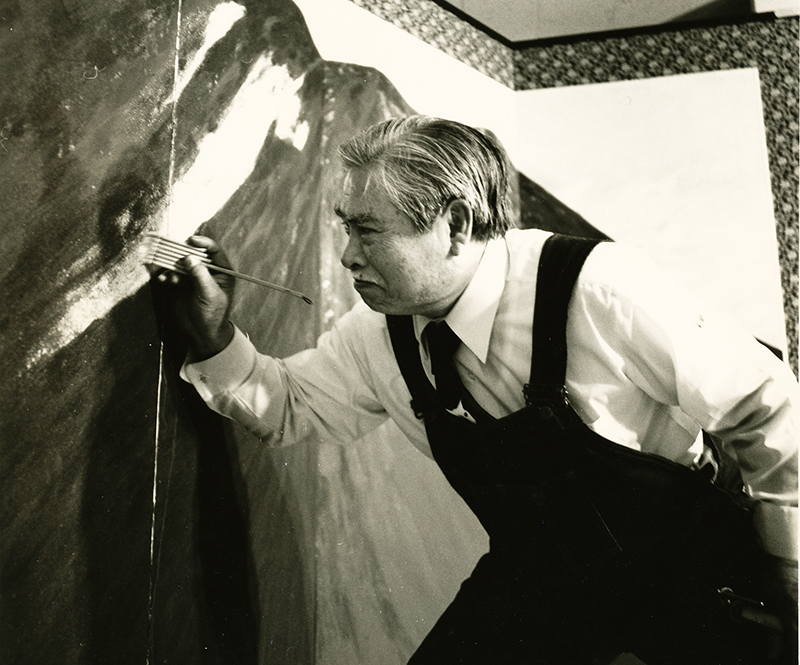
Tenkei Tachibana is evaluated as the foremost Japanese-style painter, famous especially for his works of art called “Byoubu-E”.
These kind of arts are generally translated to “Partition paintings” in English.
His most well-known style of works are “Pair of six-panel screens” or "Six-fold screens".
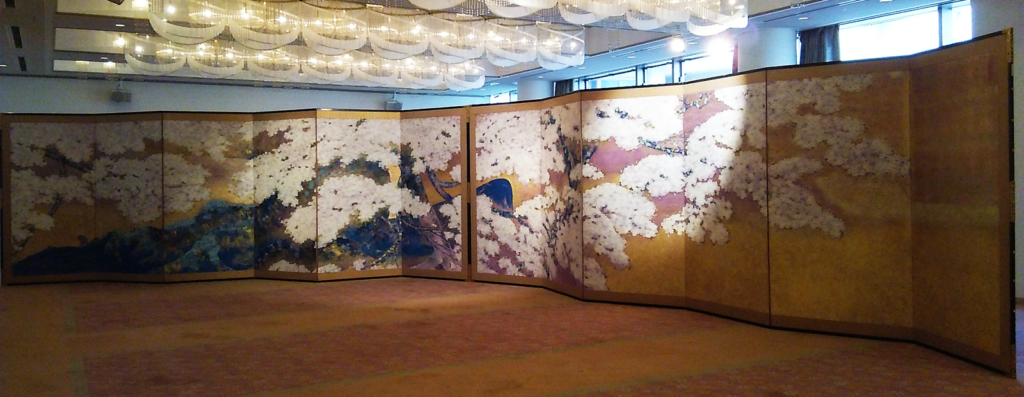
Style: "Byoubu-E" Pair of six-fold screens.
248cm×1464cm Left & Right screen in total
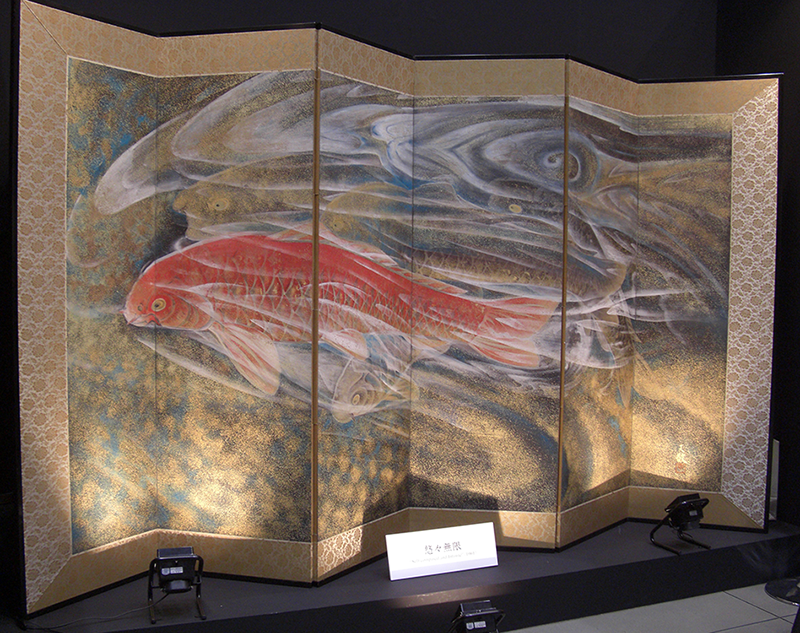
Style: "Byoubu-E" Six-panel screens
208cm×380cm
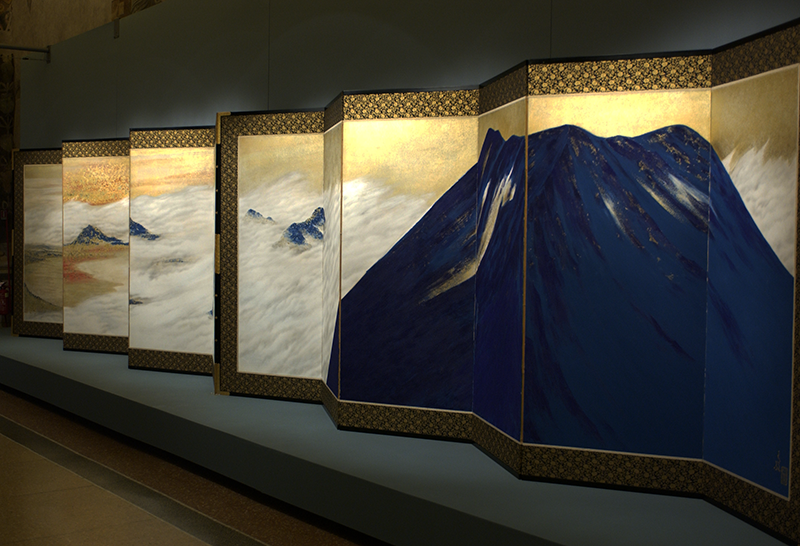
Style: "Byoubu-E" Pair of six-fold screens
218cm×1100cm Left & Right screen in total
Owned by Museum abroad
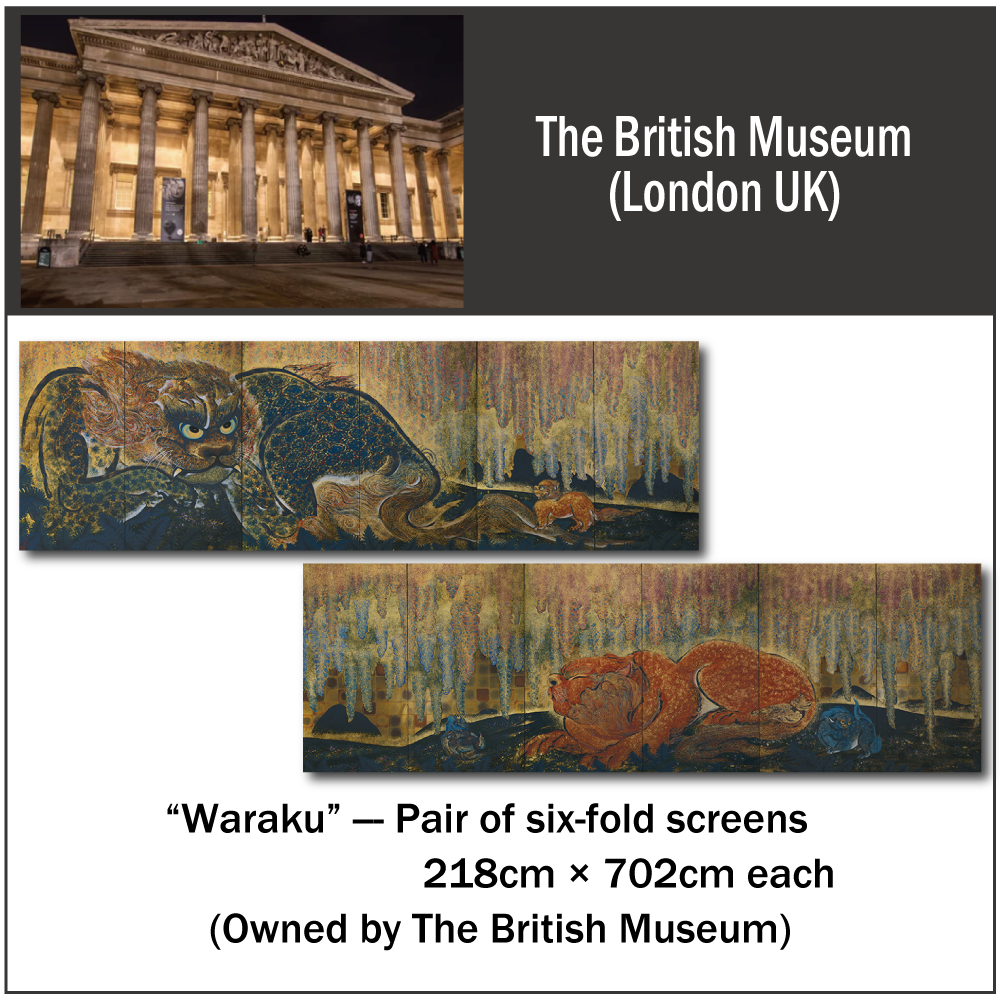
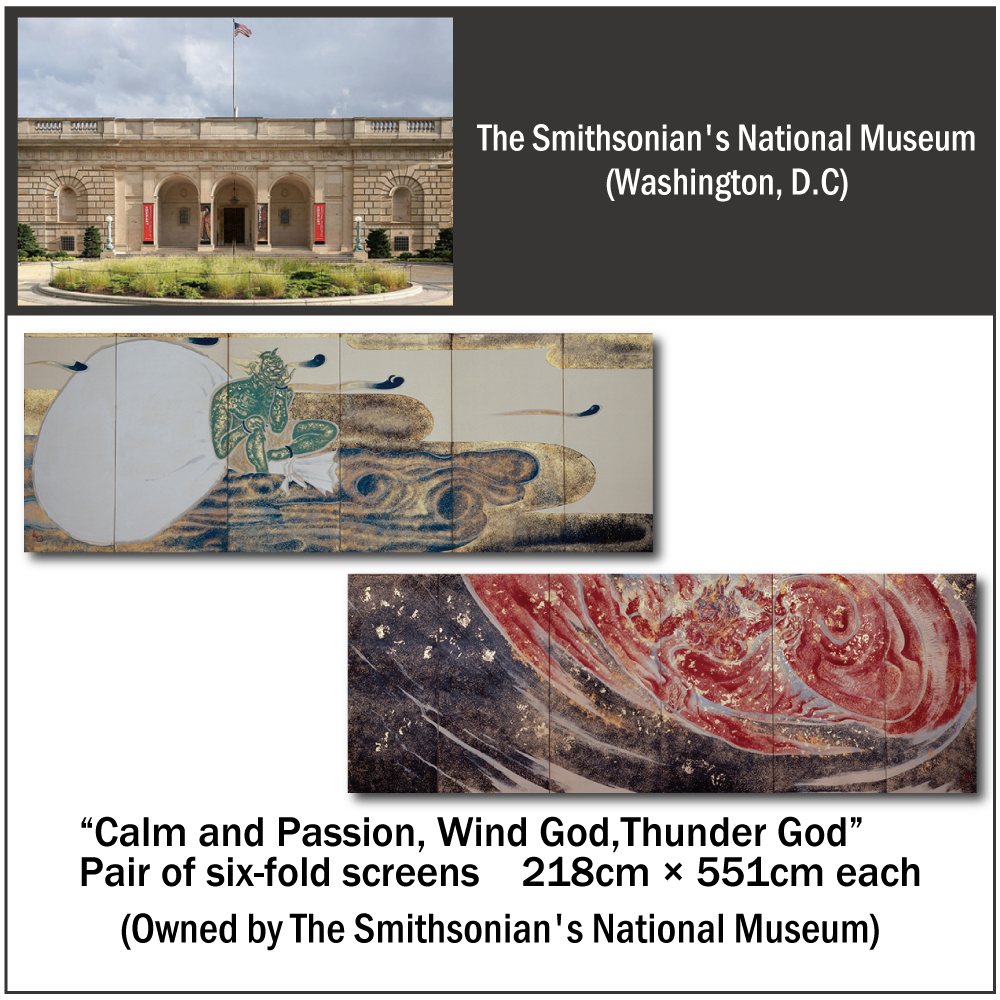
Some of his works are owned by internationally famous museums such as The British Museum, The Smithsonian Museum, and The Nelson-Atkins Museum of Art.
Database of Museum
>>The British Museum
>>The Smithsonian's National Museum
>>The Nelson Atkins Museum of Art
Career & Works
Name : Yoshifumi Nakayama
Preudonym : Tenkei Tachibana ( 1950 - 1984 )
Earlier name :
Koho Sonobe ( 1922 - 1949 )
Koka Tachibana ( 1949 - 1950 )
| 1906 | Born in Kyoto |
| 1922 | Entered Ueno Fine Arts School |
| 1926 | Studied Buddhistic fine arts : painted "Buddha's Image"(180X303) at Kannenji Temple in Yamaguchi. |
| 1927 | Painted "Mural painting" at Zendouji Temple in Fukuoka. Donated 50 paintaings for the purpose of road repairs in Takachiho, Miyazaki. |
| 1928 | Painted "Descendant of The Gods" requested by Miyazaki Prefecture. |
| 1929 | Exhibited "Pond Area" at the Dokugaten on invitation by Araki Juppo's recommendation. |
| 1930 | The exhibition "Japanese Paintings by Sonobe Koho in Commenmoration of His Trip to Italy", sponsored by Fukuoka Newspaper Press, in Fukuoka. Exhibited to "Esposizione D'Arts Giapponese" in Rome, sponsored by Italian Government. |
| 1933 | Studied in Thailand, India and Europe. The exhibition at the Thai National Art Gallery."The Dawn of Menam", acquired by Thai National Art Gallery. |
| 1934 | The exhibition in Singapore. |
| 1935 | Exhibition paintings in Bun-Ten (a top national exhibition) by invitation during overseas sojourn. |
| 1936 | Visited Canton and various place in China. The exhibition at Gloster Hotel in Hong Kong. The exhibition at Tokyo after returning home. |
| 1938 | Presented the "Defeating the Devil"( 273X303 ) to the Italian Premier Mussolini through Ministry of Foreign Affairs. The painting is now in the collection of an Italian National Museum. Exhibited "Joy"( 273X546 ) at No.12-Shinkozoten. acquired by The Headquarters of The Manchuria Kyowakai Society. Established the Nitto Fine Arts Institute. Its reception was attended by personages from the Ministry of Education and Arts circles as well as Ambassadors of Germany, Italy and Manchuria. |
| 1939 | Awarded an Order of Cultural Merits by Italian Government. |
| 1940 | Established the Manchurian Fine Arts Institute upon the request of the Manchurian Government ; recommended Kawabata Ryushi as its committee Chairman. Donated 20 paintings of Mount Fuji to Japanese emigrant village in Manchurian. Exhibited "Quickening Asia"( 273X485 ) at No.13 - Shinkozoten. |
| 1941 | The First Public Art Exhibition of Nitto Fine Arts Institute at the Tokyo Metropolitan Art Gallery. "The Exhibishment of Righteousness and the Security of the Country"( 273X1515), acquired by Department of Army. |
| 1942 | The Second Exhibition of Nitto Fine Arts Institute. "Early Spring"( 272X480 ), acquired by the Ministry of Agriculture. "Portrait of Imperial Prince Takaoka"( 303X545 ), acquired by Department of Army. |
| 1943 | Succeeded reform of the Tokyo Art School together with Taikan Yokoyama and Education Minister Okabe. Exhibited "Fighting Spirit"( 242X303 ) |
| 1945 | Met with Gen. MacArthur to recommend the preservation of the emperor system. |
| 1946 | Appointed Art Consultant to the U.S.Navy through the recommendation of Yokoyama Taikan and Lieutenant General White. |
| 1948 | Petitioned Gen. MacArthur against the death penalty for 12 of the A-class war criminals. Resigned as Art Consultant to the U.S. Navy that trained young people at private school Shoei-Jyuku after returning to Shiraito of Shizuoka. |
| 1949 | Advice by Prof. Nishida Masaaki of Tokyo Art School "Be inspired by a person's spirit" thereafter assuming the Pseudonym, Tachibana Koka. |
| 1950 | Tenkei says that May 30, "While sitting with moving white clouds and ever changing scenery. While observing , I felt shivers as if doused by cold water over my whole body, was shocked at the awesome reverence of nature's grandeur, was lost in wonder, hearing shouts,………." "Tenkei Tenkei' ( revere heaven, revere heaven ) coming as if from a heavenly voice…", immediately I renamed myself Tachibana Tenkei. Began to work on a series of screen paintings. |
| 1952 | The exhibition of "Tenkei Tachibana Shinsaku Kai" at Tokyo Kaikan. Painted "Mount Fuji and Sea of Clouds"( 218cmX1100cm) |
| 1954 | Painted "Mount Fuji", acquired by Ministry of Finance. |
| 1955 | Painted "Vairocana Buddha"( 218cmX550cm ) |
| 1956 | Painted "Early Summer of Mount Fuji"( 218cmX550cm ) |
| 1957 | The exhibition of “Tenkei Tachibana Ten“ at the Industrial Club of Marunouchi, Tokyo. |
| 1960 | The exhibition at the Mexican National Art Gallery in Mexico City by request of the Mexican Government, which subsequently traveled to major cities in Mexico. Painted “Literary and Military Arts” (218cmX 1100cm) Painted ”Mount Fuji and the sea of clouds”(218cmX1100cm) Painted “Cherry Blossoms in Full Bloom”(218cmX1100cm) |
| 1962 | Tenkei’s screen painting “Mount Fuji and Sea of Clouds”(painted 1952) was Presented to Mr. Robert F. Kennedy at Shiba Shirokane Guest House after exhibiting the painting to over three hundred dignitaries whose signatures were presented to Mr. Kennedy with the painting ; this was planned executed by Mr. Hosono Gunji, Chairman of the Board of Directors, Foreign Affairs Study Association. After demise of Mr. Robert F. Kennedy, the screen painting was acquired by The Smithsonian's National Museum, Freer Gallery of Art. Washington DC. Painted “Early Spring”(218cmX550cm) |
| 1963 | Painted “Innocent Light”(218cmX1100cm), acquired by Ikegami Honmonji Temple. Painted “The Bodhisattva Kannon”(218cmX550cm) Painted “Flying-Fish”(218cmX1100cm) |
| 1964 | Appointed Member of International Policies Committee in U.S. Painted “Spring at the Sun-warmed Palace”(178cmX512cm) |
| 1965 | The exhibition “The Art of Tenkei Tachibana” at Meiji Shrine, Tokyo. Donated Tenkei’s screen painting “The Spirit of Eight Islands-Japan”(218cmX1100cm) to Meiji Shrine. Presented the screen painting “Self-composed and Infinite”(208cmX380cm) to Generalissimo Chiang Kai-Shek on behalf of the Japanese people in gratitude for his considerations at the end of the world war Ⅱ. |
| 1966 | Lectured on “Japanese Art” at West Texas State University. Received Honorary Professorship from West Texas State University. Elected Member of Texas State Academy and Troy University in Alabama state. Received Honorary Citizen by Texas State, Amarillo City and Canyon City. Decorated with Grand Orders by Byzantine Knight Corps, St. John Knight Corps and Mexican Government. The exhibitions Canyon Art Gallery of Texas, National First bank of Washington DC and The Oriental Fine Art Gallery of New York. |
| 1970 | The exhibition “Screen Painting by "Tenkei Tachibana” at the Tokyo Art Club, in Tokyo. Painted “Blooming Iris”(222cmX714cm) ,four sides of the sliding door, “Living Clean at One Own’s Pace between Heaven and Earth” (222cmX1414cm) “Calm and Passion--Wind God, Thunder God”(218cmX1100cm) “In Nature”(50cmX180cm) |
| 1971 | The exhibition “The Art of Screen Painting by Tenkei Tachibana” at Panhandle-Plains Historical Museum. Canyon City, Texas. 1.”Mout Fuji and Clouds”(218cmX1100cm) painted in 1952. 2.”Lording it over The World”(218cmX550cm) painted in 1954. 3.”Steep Blue Hills”(218cmX550cm) painted in 1954. 4.”Red Plum Blossoms and Cat”(218cmX550cm) painted in 1955. 5.”Clear Stream”(218cmX1100cm) painted in 1956. 6.”Living Clean at one own’s Pace between Heaven and Earth” in 1970. The above 6 screen paintings were acquired by Panhandle-Plains Historical Museum. Canyon City, Texas. |
| 1972 | “Calm and Passion--Wind God, Thunder God”(218cmX1100cm) painted in 1970, acquired by The Smithsonian's National Museum, Freer Gallery of Art, Washington DC. At the Nippon Fortnight exhibited 9 screen paintings at the Neiman-Marcus, a leading department store in Dallas, Texas. |
| 1975 | The exhibition “Tenkei Tachibana no Geijutsu” at the Mitsukoshi Department Store in Tokyo. Painted “Peace & Concord”(248cmX1464cm) ”Song of the Harp in Springtime”(Plum trees and Show)(218cmX1464cm) |
| 1976 | In April, The exhibition at the Imperial Hotel in Tokyo. Exhibited “The Sprit of Eight Islands-Japan”(1965) ,“The Seas of the world…”(1968) and, painted “Symbol of Eternal Peace”(218cmX1100cm) In May, The exhibition of “L’ART DE TENKEI TACHIBANA” supported by the Japanese Embassy in France at the Galerie Drouant in Paris, France. Awarded an Order of “Medal of Cultural Merit (Gold Metal)” by the City of Paris. |
| 1978 | The exhibition at Imperial Hotel in Tokyo in October. Exhibited “Cherry-blossoms in Memory of Dr. H.P. Stern”(270cmX1600cm) In November. The exhibition at The Iwataya Department Store in Fukuoka exhibited “The Buddhist Deity Fudo Myo-o”(180cmX550cm) In November, ordained in the Buddhist priesthood by Nishiguchi Kugyo, Shingon archbishop at headquarters, Daihonzan Kokubunji temple. |
| 1979 | The exhibition at The Hankyu Department Store in Osaka in January. |
| 1980 | The exhibition at Panhandle-Plains Historical Museum, Canyon City, Texas in June, Exhibited screen painting “Cherry-blossoms in Memory of Dr. H.P. Stern”, acquired by Panhandle-Plains Historical Museum. The exhibition at Matsuzakaya Department Store in Shizuoka in July. |
| 1981 | In May, attacked by a disease, began life of recuperation. In September, The exhibition at Ginza Gallery Center. |
| 1982 | In May, Screen painting “Song of the Harp in Springtime”(Plum trees and Snow)(248cmX1464cm) painted in 1975, acquired by The Nelson-Atkins Museum of Art. Kansas City, Missouri. In June 1st, Demise. |
| 1993 | THE TENKEI TACHIBANA EXHIBTION “Tenkei’s Art-Between Heaven and Earth” at The Japanese Galleries of The British Museum from October 7th to November 7th 1993. A pair of six-fold screen painting “Waraku - Peace & Concord”(248cmX1464cm) painted 1975, acquired by The British Museum in London. |